
GST for galleries, without the spreadsheet
Artfolio · 7 min read
An art invoice with the wrong tax split isn't a typo — it's a compliance problem and an awkward conversation with a collector. The fix isn't a smarter spreadsheet. It's software that knows the rules so you don't have to remember them at 9pm.
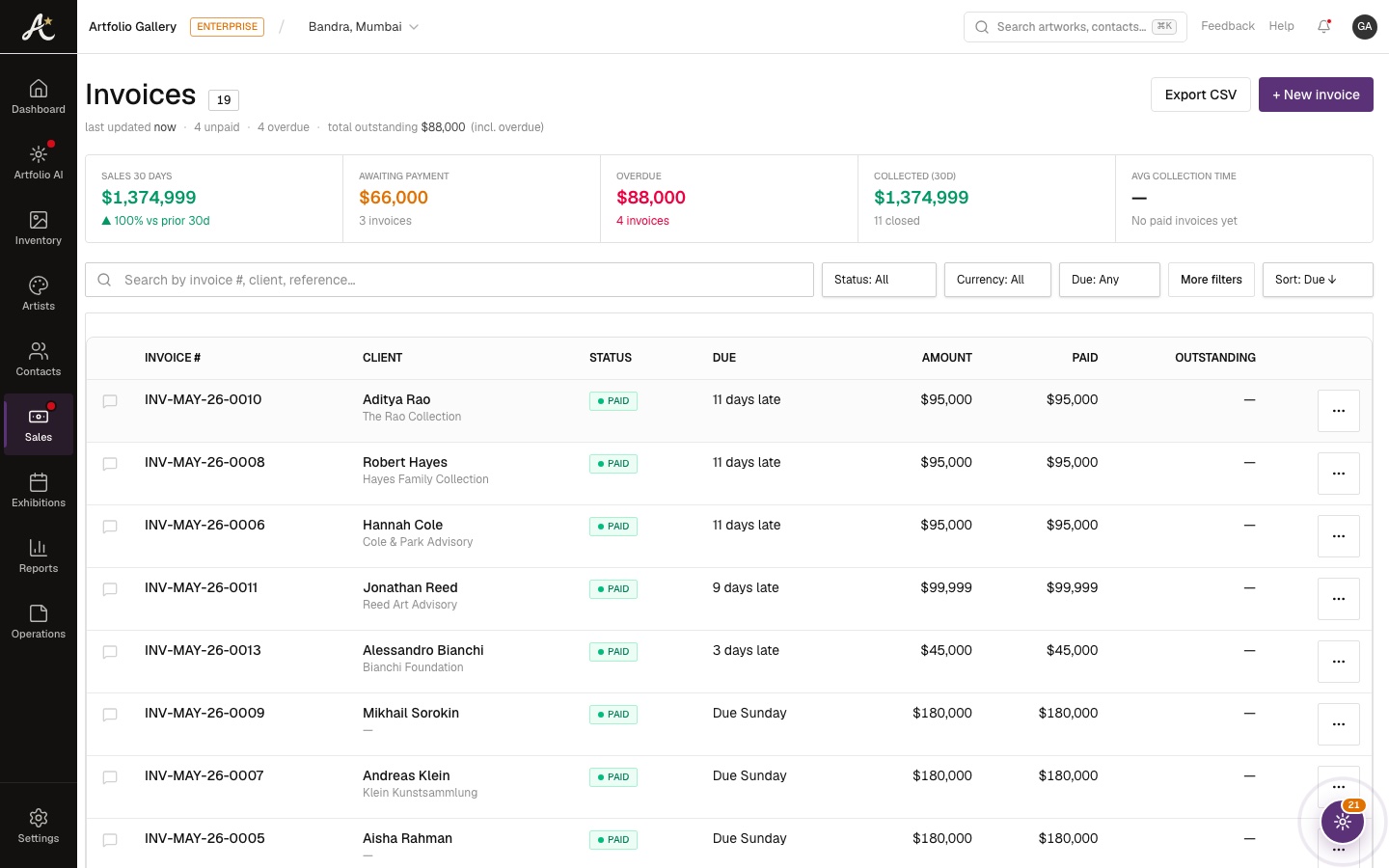
Selling art in India means living with GST, and GST on a gallery invoice is more fiddly than most people expect. Is this an intrastate sale that needs CGST and SGST, or an interstate one that needs IGST? What rate applies to the framing line versus the artwork line? Which of your two gallery locations' GSTINs goes on this document? Get any of it wrong and you're either short on tax or issuing a correction — neither of which is a good look in front of a buyer.
Galleries have historically solved this with a spreadsheet template and a lot of discipline. It works right up until it doesn't: a new staff member copies the wrong tab, an out-of-state sale gets the intrastate split, or a per-line rate gets fat-fingered. The real answer is to stop treating tax as something a human calculates per invoice, and start treating it as something the system decides from the facts of the sale.
CGST/SGST vs IGST is a destination question
The single most common gallery GST mistake is choosing the tax type by habit instead of by destination. The rule is simple in principle: the buyer's ship-to state decides it. Same state as your gallery's registered location, it's an intrastate sale — CGST plus SGST. A different state, it's interstate — IGST. The total tax is usually the same; the split, and who it's owed to, is not.
Artfolio reads the buyer's delivery address against the selling location's registration and picks the correct split automatically. You're not choosing from a dropdown and hoping — the invoice reflects where the work is actually going. When you do need to override it for a genuine edge case, you can, but the safe default is the one the law expects.
Per-line tax, because a sale isn't one line
A real gallery invoice is rarely a single artwork at a single rate. There's the work itself, and then there's framing, crating, insurance, shipping — each potentially taxed differently. A flat invoice-level rate quietly mis-states all of it.
Per-line tax handling means each line carries its own treatment:
- The artwork line at its applicable rate, the framing or service lines at theirs.
- Tax-inclusive or tax-exclusive pricing per line, with the system back-calculating the base when a price already includes tax.
- A clean CGST/SGST or IGST breakdown on the document, so the buyer — and your accountant — can see exactly how the total was reached.
The point isn't to make invoicing more complicated. It's to let the document tell the truth about a sale that genuinely has several parts.
Two locations, two GSTINs, one workspace
Galleries with more than one space — or one legal entity trading under more than one brand — hit a wall fast: each location has its own GSTIN, its own letterhead, sometimes its own bank details. Stapling that onto a single invoice template is how the wrong GSTIN ends up on the wrong sale.
Artfolio handles this with branding themes: each one carries its own logo, address, GSTIN, tax configuration and payment details. You pick the brand for a given invoice and everything downstream — the document, the tax decision, the bank line — follows from it. One workspace, several legitimate identities, no manual surgery on a master template.
The details that make an Indian invoice feel finished
A compliant invoice and a professional invoice aren't quite the same thing. The conventions Indian buyers and auditors expect are the ones galleries most often forget when they roll their own:
- Amount in words — “Rupees Four Lakh Eighty Thousand Only” — in proper lakh-and-crore form, generated automatically, not typed.
- A UPI QR code on the document so a collector can pay from their phone in one scan.
- The full proforma-to-invoice flow — quote, proforma, tax invoice — with numbering that stays sequential and clean.
- Support for 160+ currencies for the international sale that lands the same week as the local one.
Tax shouldn't be the part of a sale you dread. When the buyer's address drives the split, every line carries its own rate, and the right GSTIN attaches itself, the invoice is simply correct the first time — and you get to spend the evening doing something other than reconciling a spreadsheet. That's the version of GST a gallery can actually live with, and it's the version Artfolio ships.
See it on your own collection
Start a 30-day free trial — no credit card.