Artist Profile
JIT CHOWDHURY
India
Biography
Jit Chowdhury (b. 1988, Kolkata, West Bengal) Jit Chowdhury studied at the Academy of Fine Arts, Kolkata (2006); the Srishti School of Art, Design and Technology, Bangalore (2008–2010); and Visual Communication at the Design Institute of India, Indore (2013). The training matters because his practice sits, deliberately, at the intersection of fine art, architecture, design, and typography. Every work is calibrated for the balance between story and form.
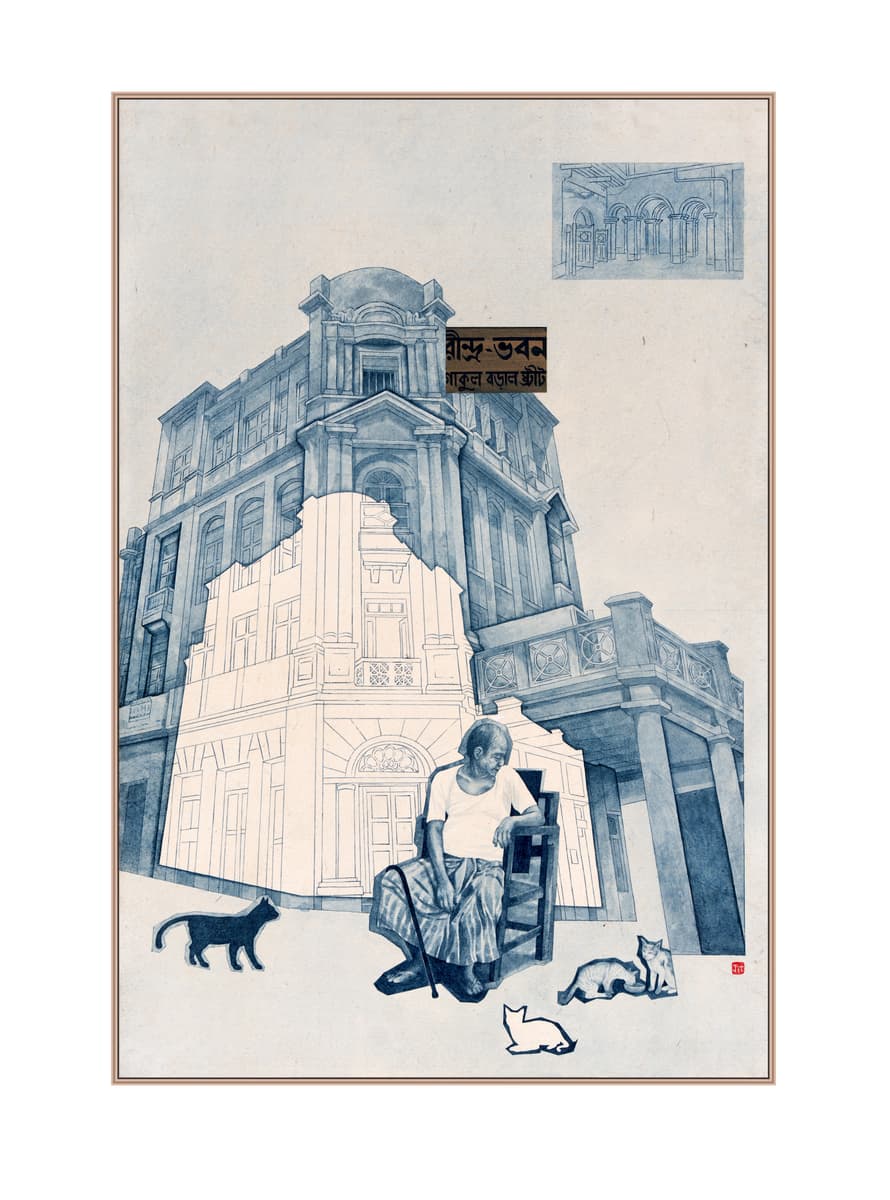
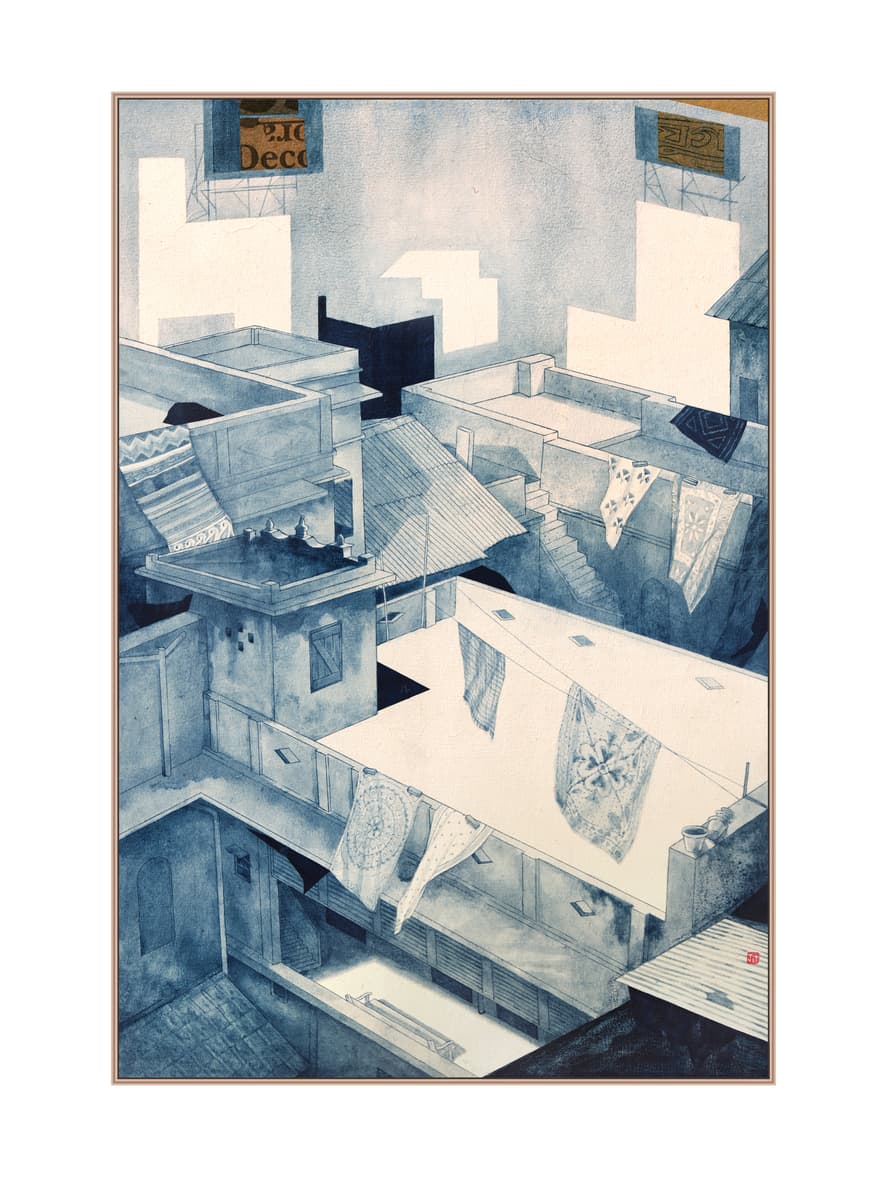
The materials are the argument. Jit works principally in two. Sholapith, the soft, white interior pith of the shola plant, is a centuries-old Bengali craft material used for the topor and mukut worn at Bengali weddings, and for the ephemeral decorations of the Durga Puja pandals, made by a hereditary community of craftsmen called the Malakars. Natural indigo, the deep blue dye that drove the colonial economy of Bengal through the eighteenth and nineteenth centuries, carries its own freight: the Indigo Revolt of 1859, the long British exploitation of indigo cultivators, and the contemporary revival of the dye in slow-textile and natural-pigment practices across India and Japan. Through painting, weaving, collage, layering, embossing, and block printing, Jit puts these two materials into conversation with each other.
The deeper conversation is with the long Bengali-Japanese craft and aesthetic exchange. From the Tagore family's hosting of Okakura Kakuzō and the Nihonga painters Yokoyama Taikan and Hishida Shunsō at the turn of the twentieth century, through the Japanese teachers later resident at Visva-Bharati's Kala Bhavan, the cross-currents between Bengal and Japan have shaped a particular tradition of attention to material, surface, and seasonal pigment. Jit reads as a contemporary participant in that exchange, his indigo addressing aizome's blues and his sholapith addressing washi paper, while his subjects remain rooted in the architectural memory of South Kolkata, where colonial Victorian, traditional Bengali, and twentieth-century modernist registers cohabit on a single street.
For UK and European curators interested in natural-dye practice (a conversation that has run through Aboubakar Fofana's natural indigo work, Hiroyuki Shindo's aizome, and the wider slow-textile revival), in the underexplored history of Bengali-Japanese modernist exchange, or in the art-design-architecture crossover, Jit offers an unusually rooted and material-specific position. He is best read as a maker, in the older sense of that word, working from a place where art and craft have not yet been forced apart.
Selected exhibitions: Method Gallery, Mumbai, 2025; Triveni Kala Sangam, New Delhi, 2025; Gallery 47A, Mumbai (continuing engagement, 2022–2026). Design and architecture presentations: India Design ID, New Delhi, 2025; Design Milestone, 2024.
Selected press: Architectural Digest India, 2023; Arts Illustrated, 2018. Selected placements: Taj Taal Kutir, Kolkata; The Ffort Raichak Heritage Resort, West Bengal